What Are Causes of Diarrhea?

Patient Presentation
A 3-year-old male came to clinic with a 6-week history of large, unformed stools at least 4 times/week. Occasionally he will have a formed stool though. The family denies blood, mucous, constipation, excessive juice or fluid intake, or recent antibiotic use. The past medical history showed Clostridium difficile infection 6 months previously after several antibiotic courses, and it was successfully treated with Flagyl®. The family history was positive for an aunt with irritable bowel syndrome. The review of systems was negative.

The pertinent physical exam showed a smiling male with appropriate weight gain since last visit and growth parameters in the 50-90%. The physical examination was negative including all mucous membranes and skin. The diagnosis of chronic diarrhea was made. Stool ova and parasites, bacterial culture, shiga and clostridium toxins were performed and were negative. The patient’s clinical course showed at one week the diarrhea continued and an evaluation for inflammatory bowel disease was begun. At two weeks, the inflammatory bowel disease evaluation was negative and the diarrhea had resolved. The clinician suspected Toddler’s diarrhea despite the negative history.

Discussion
Diarrhea is increased stool volume, usually with looser consistency and increased frequency than normal. Frequency may not change however. These qualitative attributes are relative to the person’s normal bowel pattern. Acute viral gastroenteritis, one of the most common causes, usually resolves in 2-5 days. Chronic diarrhea is defined as diarrhea lasting more than 2 weeks. With chronic diarrhea there is often a cycle of infection, malabsorption and malnutrition which propagates the diarrhea.

Osmotic diarrhea usually will cease once the offending agent is stopped such as juice (Toddler’s diarrhea) or dairy products (Lactose intolerance). It has a low stool electrolyte content. Weight loss and failure to thrive may be seen. Secretory diarrhea will continue even when taking nothing by mouth. It has a high stool electrolyte content. Infectious diarrhea often is accompanied by fever, nausea, emesis, prior antibiotic use and possibly bloody stools. More commonly it is an acute problem. Inflammatory diarrhea is generally chronic with other signs of disease such as failure to thrive, arthritis, perianal lesions, and/or rash.

Diarrhea prevention includes high standards of hygiene include water, food and personal hygiene. Vaccination against Rotavirus is available in many countries. Treatment for acute diarrhea includes oral rehydration solutions, intravenous isotonic fluids, and early refeeding. Antimicrobials for identified microorganisms depends on the organism and presenting problems. Treatment for chronic diarrhea includes removal of the offending agent (e.g. cow’s milk, laxative, juice, etc.), and appropriate evaluation to identify the disease process and its treatment.

Learning Point
Common causes of diarrhea include:

    Acute

    • Allergic enteritis – cow’s milk allergy, soy allergy
    • Brush border deficiency – Fructose, Isomaltose, Lactose, Sucrose
    • Infectious
      • Bacteria – common organisms include Aeromonas, Campylobacter, Clostridium, E. coli, Klebsiella, Plesiomonas, Salmonella, Shigella, Vibrio cholera, Yersinia
      • Parasite – common organisms include Amoeba, Cryptosporidium, Giardia, Strongyloides
      • Viral – common organisms include Adenovirus, Astrovirus, Calcivirus, Norovirus, Rotavirus
    • Medications – laxative use or abuse, Magnesium-containing antacids, opioid withdrawal, medication colorants and flavorings such as sorbitol
    • Methylxanthines – caffeine, theophylline
    • Surgical problems – Ascites, Appendicitis, Intussception, Malrotation, Necrotizing enterocolitis, Peritonitis
  • Chronic
    • Abetalipoproteinemia
    • Allergic enteritis – cow’s milk allergy, soy allergy, eosinophilic enteritis
    • Bile salt malabsorption
    • Brush border deficiency – Fructose, Isomaltose, Lactose, Sucrose
    • Celiac disease
    • Congenital chloride diarrhea
    • Endocrine – Addison’s disease, diabetes, hypoparathyroidism, pancreatic insufficiency (Cystic fibrosis, Schwachman-Diamond syndrome), thyrotoxicosis
    • Fecal impaction – including Hirshsprung disease
    • Infectious
      • Parasites – common organisms include Cryptosporidium, Giardia, Tuberculosis
      • Viruses – common organisms include HIV
    • Intestinal lymphangectasia
    • Inflammatory bowel syndrome
    • Immunodeficiency – Common variable immunodeficiency, Graft-vs-Host Disease
    • Irritable bowel syndrome
    • Liver disease, advanced
    • Malnutrition – failure to thrive, acrodermatitis entropathica
    • Medications – alcohol, laxative use or abuse, medication colorants and flavorings such as sorbitol, NSAID enteritis
    • Oncological – primary tumors (including lymphoma), radiation enteritis
    • Psychological – secondary to stress
    • Protein losing enteropathy
    • Surgical problems – short gut syndrome, feeding tube problems
    • Toddler’s diarrhea – excessive intake of clear, sweet liquids
    • Tropical sprue
    • Vitamin
      • Deficiency – Folate, Niacin
      • Toxicity – Niacin

A differential diagnosis of gastrointestinal bleeding can be found here, and one of different colored stools can be found here.

Questions for Further Discussion
1. What is the mathematical formula for determining secretory versus osmotic diarrhea?
2. How common are pediatric diarrheal deaths in the world? In your own country?
3. What is your approach to evaluating chronic diarrhea?

Related Cases

To Learn More
To view pediatric review articles on this topic from the past year check PubMed.

Evidence-based medicine information on this topic can be found at SearchingPediatrics.com, the National Guideline Clearinghouse and the Cochrane Database of Systematic Reviews.

Information prescriptions for patients can be found at MedlinePlus for this topic: Diarrhea
and at Pediatric Common Questions, Quick Answers for this topic: Chronic Diarrhea

To view current news articles on this topic check Google News.

To view images related to this topic check Google Images.

Lo CW, Walker WA. Chronic Protracted Diarrhea of Infancy: A Nutritional Disease. Pediatrics 1983; 72: 786-800.

Illingworth RS. Common Symptoms of Disease in Children. Blackwell Scientific Publications: Oxford. 1988:90-94.

Woodhead JC. Pediatric Clerkship Guide. Mosby. St. Louis MO, 2003:226-229.

Berkowitz CD. Diarrhea. Pediatrics A Primary Care Approach. W.B. Saunders Company, Philadelphia PA. 1996;344-348.

Grimwood K, Forbes DA. Acute and persistent diarrhea. Pediatr Clin North Am. 2009 Dec;56(6):1343-61.

Guandalini S. Frye RE, Tamer MA. Diarrhea. eMedicine.
Available from the Internet at http://emedicine.medscape.com/article/928598-overview (rev. 4/8/10, cited 10/5/10).

ACGME Competencies Highlighted by Case

  • Patient Care
    1. When interacting with patients and their families, the health care professional communicates effectively and demonstrates caring and respectful behaviors.
    2. Essential and accurate information about the patients’ is gathered.
    3. Informed decisions about diagnostic and therapeutic interventions based on patient information and preferences, up-to-date scientific evidence, and clinical judgment is made.
    4. Patient management plans are developed and carried out.
    5. Patients and their families are counseled and educated.
    7. All medical and invasive procedures considered essential for the area of practice are competently performed.
    8. Health care services aimed at preventing health problems or maintaining health are provided.

  • Medical Knowledge
    10. An investigatory and analytic thinking approach to the clinical situation is demonstrated.
    11. Basic and clinically supportive sciences appropriate to their discipline are known and applied.

  • Practice Based Learning and Improvement
    13. Information about other populations of patients, especially the larger population from which this patient is drawn, is obtained and used.

  • Systems Based Practice
    23. Differing types of medical practice and delivery systems including methods of controlling health care costs and allocating resources are known.
    24. Cost-effective health care and resource allocation that does not compromise quality of care is practiced.

    Author

    Donna M. D’Alessandro, MD
    Professor of Pediatrics, University of Iowa Children’s Hospital

  • What Are the Classification of Genetic Disorders?

    Patient Presentation
    A pediatrician was telling her partner about a good conversation that she had that day with a parent. She had followed an 8-year old female who had facial hemi-hypertrophy. Over time, several evaluations including consultations with genetics, neurology and imaging. did not reveal a diagnosis. The mother was a strong advocate but wanted to continue to pursue “reasonable” evaluations. The pediatrician would review the medical literature about hemi-hypertrophy and the mother looked at the Internet and found other local services to help support her child and family. During a routine visit, her dentist noticed an unusual lip lesion. The mother agreed to have a picture taken and it was sent to a dental pathologist, who said that it was classic for the diagnosis of Parry-Romberg syndrome which is hemifacial atrophy. (A geneticist later confirmed the diagnosis.) The mother called the pediatrician to let her know the diagnosis and stated that it certainly didn’t change her love of her child, but now she had a diagnosis and she would have a better idea of what the future may hold for her daughter and family. The pediatrician commented that she herself was pleased that the mother felt supported by her efforts to continue to evaluate the child, and that this family made her carefully look at parent desires for testing and to have honest conversations with families about testing and necessity of procedures. She said “…genetics is such a rapidly advancing field that it is always a good thing to have follow-up of your undiagnosed cases.”

    Discussion
    Parry-Romberg syndrome is a rare disorder with atrophy of the soft tissues and skin of the face (usually left-sided) called hemifacial atrophy. External tissues are more affected but also eye, oral, and neck structures. Skin hypo- or hyperpigmentation and whitening of the hair and/or alopecia may occur. Trigeminal neuralgia and seizures can also be seen. Onset is usually between 5-15 years and is more common in females. The atrophy usually lasts 2-10 years and then seems to enter a stable phase. There appears to be a genetic basis for this disease but the exact mechanism is unknown. In the classification below, it would be a miscellaneous disorder.

    Learning Point
    As the tools, techniques and knowledge in the exploding field of genetics continues into the future, many of the disorders and syndromes that are currently classified into one category will necessarily be reclassified because of new knowledge. The field of epigenetics is ripe for expanding classifications and better understanding the natural history of these problems.

    Genetic disorder categories include:

    • Chromosomal disorders
      • Whole or part of a chromosome is missing or duplicated. These are large enough to be seen on a standard karyotype.
      • Examples: Trisomy 21, Cri-du-chat, Turner, Kleinfelter
      • Testing: karyotype
    • Microdeletion or microduplication
      • Part of a chromosome is missing or duplicated. These are often too small to be seen on a standard karyotype
      • Examples: DiGeorge syndrome, Prader-Willi syndrome (deletion type), Smith-Magenis syndrome, Williams syndrome
      • Testing: FISH – fluorescent in situ hybridization, aCHG – array comparative hybridization
    • Single gene disorders
      • A mutation on a single gene. May be autosomomal dominant, autosomal recessive, X-linked.
      • Examples: Cystic fibrosis, Duchenne muscular dystrophy, Marfan syndrome, Sickle cell anemia
      • Testing: DNA sequencing, mutation analysis, deletion testing
    • Triplet repeat disorders
      • Exceeding the number of normal trinucleotide repeats in genes. The normal number varies depending on the gene.
      • Examples: Fragile X, Huntington’s disease
      • Testing: DNA testing for number of repeats
    • Epigenetic disorders
      • The genetic sequence is not changed, but the expression of the DNA is altered
      • Examples: Angleman, Beckwith-Wiedemann syndrome, Prader-Willi (methylation or isodisomy type)
      • Testing: Methylation testing
    • Multifactorial disorders
      • Combination of genetics and environment
      • Examples: isolated congenital heart defects, cleft lip and palate, pyloric stenosis
      • Testing: may be available if part of a syndrome, but usually no testing is available
    • Miscellaneous
      • Not otherwise categorized, and also includes:
        • Associations or non-random association of anomies without a known genetic basis, example is CHARGE association
        • Disruptions or morphological defect of a previously normal organ, example is amniotic bands
        • Sequences or one malformation leads to other malformation, example is Pierre-Robin sequence

    Questions for Further Discussion
    1. What types of disorders can be identified on newborn screening using tandem mass spectrometry?
    2. What tests do your state/country perform as part of newborn screening?

    Related Cases

    To Learn More
    To view pediatric review articles on this topic from the past year check PubMed.

    Evidence-based medicine information on this topic can be found at SearchingPediatrics.com.

    Information prescriptions for patients can be found at MedlinePlus for these topics: Facial Injuries and Disorders and Genetic Disorders.

    To view current news articles on this topic check Google News.

    To view images related to this topic check Google Images.

    NINDS Parry-Romberg Information Page. National Institute of Neurological Disorders and Stroke.
    Available from the Internet at http://www.ninds.nih.gov/disorders/parry_romberg/parry_romberg.htm (rev. 2/2007, cited 10/4/10).

    Shur N, Abulo D. Genetic Syndromes: From Clinical Suspicion to Referral to Diagnosis. Pediatric Annals. 2009;38;419-425.

    Online Mendelian Inheritance in Man. Hemifacial atrophy, progressive; HFA.
    Available from the Internet at http://www.ncbi.nlm.nih.gov/omim (rev. 4/30/2010, cited 10/4/2010).

    ACGME Competencies Highlighted by Case

  • Patient Care
    1. When interacting with patients and their families, the health care professional communicates effectively and demonstrates caring and respectful behaviors.
    2. Essential and accurate information about the patients’ is gathered.
    3. Informed decisions about diagnostic and therapeutic interventions based on patient information and preferences, up-to-date scientific evidence, and clinical judgment is made.
    4. Patient management plans are developed and carried out.
    6. Information technology to support patient care decisions and patient education is used.
    7. All medical and invasive procedures considered essential for the area of practice are competently performed.
    8. Health care services aimed at preventing health problems or maintaining health are provided.
    9. Patient-focused care is provided by working with health care professionals, including those from other disciplines.

  • Medical Knowledge
    10. An investigatory and analytic thinking approach to the clinical situation is demonstrated.
    11. Basic and clinically supportive sciences appropriate to their discipline are known and applied.

  • Practice Based Learning and Improvement
    12. Evidence from scientific studies related to the patients’ health problems is located, appraised and assimilated.
    13. Information about other populations of patients, especially the larger population from which this patient is drawn, is obtained and used.

  • Interpersonal and Communication Skills
    17. A therapeutic and ethically sound relationship with patients is created and sustained.
    18. Using effective nonverbal, explanatory, questioning, and writing skills, the healthcare professional uses effective listening skills and elicits and provides information.
    19. The health professional works effectively with others as a member or leader of a health care team or other professional group.

  • Professionalism
    22. Sensitivity and responsiveness to patients’ culture, age, gender, and disabilities are demonstrated.

  • Systems Based Practice
    24. Cost-effective health care and resource allocation that does not compromise quality of care is practiced.
    25. Quality patient care and assisting patients in dealing with system complexities is advocated.

    Author

    Donna M. D’Alessandro, MD
    Professor of Pediatrics, University of Iowa Children’s Hospital

    Stacy McConkey, M.D.
    Associate Professor of Pediatrics, University of Iowa Children’s Hospital

  • What Are Common Toxidromes?

    Patient Presentation
    A 30-month-old male was transferred to the inpatient unit at a regional children’s hospital for worsening clinical condition. The night before admission, the father said the patient fell off the back of a couch hitting his head on a chair and/or floor. The child then went limp and was lethargic. While emergency medical services was enroute, the child began to flutter his eyes and have several episodes of emesis. At the local emergency room, his initial laboratory tests were normal except for a glucose of 200 mg/dl and potassium of 2.8 mg/dl. A computed tomography examination of the head was negative. He was admitted locally but began to have more gagging and was not coherent or consistently arousable. The past medical history included croup. The family history included a sister with seizures and other family members with asthma and diabetes The review of systems was negative.

    The pertinent physical exam showed a lethargic appearing male who became somewhat agitated with handling. He had normal growth parameters and vital signs. HEENT showed intermittent eye opening without direct gaze or tracking. Pupils were 3 mm and reactive. Abdomen revealed decreased bowel sounds. Neurological examination showed he was unable to hold his head without support and had marked truncal ataxia. There was decreased tone and normal deep tendon reflexes. Repeat laboratory evaluation was normal. When the family arrived, they mentioned that they had been unable to find the sister’s Tegretol®. The patient’s Tegretol level was drawn about 8 hours after arrival at the local emergency room and was found to be 17.4 mg/L. (normal = 4-12 mg/L.) and diagnosis of a Tegretol overdose was made. The patient was treated with close monitoring and hydration. The patient’s clinical course showed that he was back to his normal baseline at 36 hours. The outside hospital and children’s hospital urine toxicology testing was negative. As there was a complicated social history and other children in the home with injuries (e.g. accidental broken bones and another overdose in other children), the Department of Human Services was contacted and agreed with discharge home but they were planning on investigating the home situation within 48 hours.

    Discussion
    Treatment for toxicologic emergencies initially includes the traditional ABC’s of airway, breathing and circulation management. “D” includes drugs such as glucose, naloxone, thiamine, hydration and oxygen, and disability treatment (or neurological status, some say “Da Brain”) such as fluid management, hyperventilation, etc. “D” in toxicological emergencies also includes decontamination including gastric lavage, syrup of ipecac, activated charcoal, and bowel cathartics. Although antidotes do exist, there are relatively few for the plethora of potential toxic substances. Supportive treatment is a mainstay including fluid management (i.e. hydration, acidification/alkalinazation, diuresis, and dialysis), electrolyte management (i.e. glucose, calcium and potassium management), respiratory management, and an antidote if available.

    The social history is important in all toxicologic emergencies. Accidental overdose is usually the most common reason for a toxicologic emergency in young children and brings up the issue of possible child neglect. Older children and teens may attempt suicide necessitating psychiatric consultation and social service implementation. Forced ingestion may reveal issues of coercion, and even attempted battery, rape or murder. Occupational or recreational exposure may bring to light general safety standards.

    Carbamazepine (Tegretol®) is a common anti-epileptic medication. Peak plasma levels occur 6-24 hours after ingestion.

    • Carbamazepine overdose
      • Most Common Presentation
        • Mental Status – altered
        • Neuromuscular – seizure, dystonia
        • Lung – depression or apnea
        • Eyes – ophthamoplegia
        • Skin – hypo- or hyperthermia
      • Other Common Problems
        • Lung – edema
        • Skin – idiosyncratic reactions
        • GI/GU – decreased bowel sounds, decreased bowel emptying
        • Other – SIADH
      • Agent – carmamazepine
      • Treatment – support, hemodialysis

    Learning Point
    Toxidromes are poisoning patterns or constellations of physical examination findings that are found because of a toxic dose of a medication, drug or toxin. Common toxidromes include:

    • Anticholinergic
      • Most Common Presentation
        • Mental Status – altered
        • Eyes – midriasis
        • Skin – dry, flushed, hyperthermia, dry mucous membranes
        • GI/GU – decreased bowel sounds, urinary retension
      • Other Common Problems
        • Mental Status – seizures
        • Neuromuscular – rhabdomyolysis
        • Heart – dysrhythmias
      • Agent – antihistamines, atropine, scopolamine, tricyclic antidepressants
      • Treatment – physostigmine, sedation, cooling
    • Cholinergic
      • Most Common Presentation
        • Neuromuscular – muscle fasciculations, weakness
        • Lung – respiratory secretions
        • Skin – lacrimination, salivation
        • GI/GU – nausea, emesis, increased stooling and urination
      • Other Common Problems
        • Mental Status – seizures
        • Neuromuscular – paralysis
        • Heart – bradycardia
        • Lung – respiratory failure
        • Eyes – miosis, mydriasis
      • Agent – insecticides including carbamate, organophosphate, mushrooms
      • Treatment – atropine, pralidoxime, airway management and ventilatory support
    • Sympathomimetic
      • Most Common Presentation
        • Mental Status – agitation
        • Heart – tachycardia, hypertension
        • Eyes – mydriasis
        • Skin – diaphoresis, hyperthermia
      • Other Common Problems
        • Mental Status – seizures
        • Neuromuscular – rhabdomyolysis
        • Heart – cardiac arrest, myocardial infarction
      • Agent – amphetamine, cocaine
      • Treatment – sedation, cooling, hydration
    • Hypoglycemic
      • Most Common Presentation
        • Mental Status – altered
        • Heart – tachycardia, hypertension
        • Skin – diaphoresis
      • Other Common Problems
        • Mental Status – abnormal behavior, slurred speech, seizures
        • Neuromuscular – paralysis
        • GI/GU – hypoglycemia
      • Agent – insulin, sulfonylureas
      • Treatment – glucose solutions intravenously or orally
    • Opioid
      • Most Common Presentation
        • Mental Status – depressed
        • Lung – respiratory depression
        • Eyes – miosis
      • Other Common Problems
        • Lung – edema
        • Skin – hypothermia
      • Agent – clonidine, heroin, morphine
      • Treatment – naloxone, respiratory support
    • Salicylates
      • Most Common Presentation
        • Mental Status – altered
        • Heart – tachycardia
        • Lung – hyperpnea, respiratory alkalosis
        • Skin – diaphoresis
        • GI/GU – nausea, emesis
        • Other – metabolic acidosis, tinnitus
      • Other Common Problems
        • Heart – cardiorespiratory arrest
        • Lung – edema
        • GI/GU – ketonuria
        • Other – fever (low grade)
      • Agent – aspirin, wintergreen oil
      • Treatment – hydration, urine alkalinization, hemodialysis
    • Serotonin
      • Most Common Presentation
        • Mental Status – altered especially agitation, hallucination
        • Neuromuscular – increased tone, hyperreflexia
        • Skin – hyperthermia
      • Other Common Problems
        • Mental Status
        • Neuromuscular – whole body tremors
      • Agent – SSRI, SSRI with other medications such as MAOI and TCAs, drugs of abuse including ectasy, LSD
      • Treatment – cooling, sedation, possibly cyproheptadine

    Acetaminophen is not a toxidrome but a common poisoning so it included it here for comparison.

    • Acetaminophen
      • Most Common Presentation
        • Skin – diaphoresis
        • GI/GU – anorexia, nausea, emesis
      • Other Common Problems
        • Mental Status – altered, agitated
        • Heart – dysrhythmia
        • Skin – jaundice
        • GI/GU – hypoglycemia, hepatitis, pancreatitis, renal failure
      • Agent – acetaminophen
      • Treatment – N-acetyl choline

    Questions for Further Discussion
    1. What is the telephone number for the American Association of Poison Control Centers where 24 hour information can be obtained?
    2. What substances are tested for in your local urine toxicology screening test?
    3. What are indications for activated charcoal?
    4. Under what circumstances is Syrup of Ipecac used?
    5. What are some measures parents can take at home to prevent an accidental overdose?

    Related Cases

    To Learn More
    To view pediatric review articles on this topic from the past year check PubMed.

    Evidence-based medicine information on this topic can be found at SearchingPediatrics.com, the National Guideline Clearinghouse and the Cochrane Database of Systematic Reviews.

    Information prescriptions for patients can be found at MedlinePlus for this topic: Poisoning

    To view current news articles on this topic check Google News.

    To view images related to this topic check Google Images.

    Fleisher GR, Ludwig S. Synopsis of Pediatric Emergency Medicine. Williams and Wilkins. Baltimore, MD. 1996:405-415.

    RxList. Tegretol.
    Available from the Internet at http://www.rxlist.com/tegretol-drug.htm (rev. 1/3/2008, cited 9/27/2010).

    Waseem W, Gernsheimer JR. Toxicity, Carbemazepine. eMedicine.
    Available from the Internet at http://emedicine.medscape.com/article/1011240-overview (rev. 10/27/2009, cited 9/27/2010).

    Defendi GL, Tucker JR. Toxicity, Acetaminophen. eMedicine.
    Available from the Internet at http://emedicine.medscape.com/article/1008683-overview (rev. 4/16/2010, cited 9/27/10).

    Emergency Central. Table 98.1 Toxidromes.
    Available from the Internet at http://emergency.unboundmedicine.com/emergency/ub/view/Emergency-Medicine-Manual/410204/0/Toxidromes (rev. 2010, cited 9/27/2010).

    ACGME Competencies Highlighted by Case

  • Patient Care
    1. When interacting with patients and their families, the health care professional communicates effectively and demonstrates caring and respectful behaviors.
    2. Essential and accurate information about the patients’ is gathered.
    3. Informed decisions about diagnostic and therapeutic interventions based on patient information and preferences, up-to-date scientific evidence, and clinical judgment is made.
    4. Patient management plans are developed and carried out.
    7. All medical and invasive procedures considered essential for the area of practice are competently performed.
    8. Health care services aimed at preventing health problems or maintaining health are provided.
    9. Patient-focused care is provided by working with health care professionals, including those from other disciplines.

  • Medical Knowledge
    10. An investigatory and analytic thinking approach to the clinical situation is demonstrated.
    11. Basic and clinically supportive sciences appropriate to their discipline are known and applied.

  • Practice Based Learning and Improvement
    13. Information about other populations of patients, especially the larger population from which this patient is drawn, is obtained and used.

  • Interpersonal and Communication Skills
    19. The health professional works effectively with others as a member or leader of a health care team or other professional group.

  • Professionalism
    21. A commitment to ethical principles pertaining to provision or withholding of clinical care, confidentiality of patient information, informed consent, and business practices are demonstrated.

    Author

    Donna M. D’Alessandro, MD
    Professor of Pediatrics, University of Iowa Children’s Hospital
  • What is the Differential Diagnosis of Back Pain?

    Patient Presentation
    A 13-year-old female came to clinic with a 2 week history of “tailbone” pain. It was chronic but not increasing and occurred only during the day. The pain was worse with movement, particularly twisting and lying down. She denied any radiation or shooting pain, nor problems walking or tripping, and no bowel or bladder problems. She also denied any fever, chills, weight loss, bruising or bleeding. There was no trauma and she denied sitting for long periods of time in one position. There were no unusual stressors and she had been going to school and doing social activities. As it was autumn, she was recently raking leaves and doing more outdoor yard work. She had tried occasional ibuprofen with some relief. The past medical history and review of systems were negative. The family history was negative for significant musculoskeletal, neurological or oncological problems.

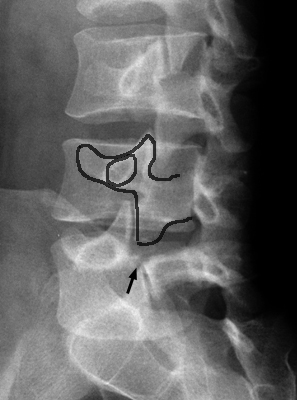
    The pertinent physical exam showed she had appropriate growth parameters with no weight loss and was in mild pain when moving between the chair and examination table. Musculoskeletal examination found pain on the right paraspinal region in the L5-S1 area. The pain became worse with moving to a lying position or hyperextension. It was not changed with flexion. Hips were normal. There was good tone and strength, with normal deep tendon reflexes and normal sensation in the lower extremities. Because of the increased pain with hyperextension, the physician thought that this could be a spondylolysis but the radiologic evaluation of lower spine radiographs were negative. The diagnosis of mechanical back pain was made. She was to begin anti-inflammatory doses of ibuprofen and rest her back for 5 days. If there was no improvement at that time, she was to call back and a referral to physical therapy for back rehabilitation made.

    Case Image

    Figure 91 – Oblique radiographs of the lumbar spine demonstrates normal appearing pars interarticularis bilaterally. No scotty dog deformity is noted.

    Discussion
    Musculoskeletal complaints are common problems but back pain is less common, although probably very much underreported. Back pain is less common in younger children and then increases over time. One study of 1000 consecutive general pediatric clinic visits in patients 3-15 years, found 4 patients presenting with back pain (0.4%), this represented 6% of all patients with musculoskeletal problems. Another study of a population based cohort of children, ages 11-14 years, found a baseline one-month prevalence of 24%. After one year an additional 18.6% reported back pain. Incidence increased with age, female gender, and patients with conduct disorders or increased somatic complaints. Interestingly, backpack weight did not affect the risk of developing back pain. Females may be at increased risk because of different biomechanics including broader hips, greater femoral neck anteversion, and shorter limb length. Pregnancy may also cause stretching of the pelvic and sacroiliac ligaments which could possibly lead to dysfunction.

    Back pain is less common in younger children and then increases over time. Therefore the younger the child presenting with back pain, the more likely that it is caused by a serious problem and needs investigation.

    Spondylolysis (remember lysis) is a stress fracture of one of the pars interarticularis of the vertebrae usually in the lumbar area. It is often seen in gynmnasts and football lineman, and other sports with repeated hyperextension of the lower back. Oblique radiographs of the lower spine show a “Scotty Dog” appearance. The neck of the Scotty Dog is the pars interarticularis and if there is a “collar” on the dog, then the fracture diagnosis is made.

    Spondylolisthesis is an anterior displacement of the vertebral pedicle often due to bilateral spondylolysis. Spondylolisthesis means vertebral slippage (remember slippage). Therefore with bilateral spondylolysis or bilateral fractures the vertebral pedicle ‘slips’ anteriorly. With spondylolysis or spondylolisthesis, the patient will usually complain of increased pain with hyperextension of the lower spine.

    Learning Point
    The differential diagnosis of back pain in children includes:

    • Musculoskeletal
      • Mechanical pain
        • Recognized trauma – motor vehicle accident, fall, twisting/lifting heavy object
        • Unrecognized trauma – sitting for long time i.e. bicycling, playing an instrument), operating vibratory equipment
        • Overuse
      • Fracture – hip, spondylolysis, spondylolisthesis
      • Vertebral slipped epiphysis
      • Arthritis – Juvenile rheumatoid arthritis, ankylosing spondylitis, spondyloarthropathy, Reiter syndrome
      • Avascular necrosis of the femoral head
      • Disc disease
      • Hip disease
      • Lumbosacral radiculopathy
      • Iliotibial band syndrome
      • Sacroilitis
    • Infectious
      • Osteomyelitis – Staphylococcus, Streptococcus, Tuberculosis
      • Sacroiliac joint infection
    • Malignancy
      • Primary – often spinal cord tumor, less commonly primary bone tumor
      • Metastatic – also less common from distant sites but drop metastases from brain tumors may occur
    • Other
      • Abdominal disease
      • Crohn’s disease
      • Genetic – congenital or metabolic
      • Psychiatric – depression, drug seeking, conversion disorder, malingering
      • Sickle cell disease

    Questions for Further Discussion
    1. What signs or symptoms make serious organic pathology more likely in children?
    2. What evaluation can be considered to work-up back pain?

    Related Cases

    To Learn More
    To view pediatric review articles on this topic from the past year check PubMed.

    Evidence-based medicine information on this topic can be found at SearchingPediatrics.com, the National Guideline Clearinghouse and the Cochrane Database of Systematic Reviews.

    Information prescriptions for patients can be found at MedlinePlus for this topic: Back Pain

    To view current news articles on this topic check Google News.

    To view images related to this topic check Google Images.

    de Inocencio J. Musculoskeletal pain in primary pediatric care: analysis of 1000 consecutive general pediatric clinic visits. Pediatrics. 1998 Dec;102(6):E63.

    Jones GT, Watson KD, Silman AJ, Symmons DP, Macfarlane GJ. Predictors of low back pain in British schoolchildren: a population-based prospective cohort study. Pediatrics. 2003 Apr;111(4 Pt 1):822-8.

    Sherman AL, Gotlin R. Sacroiliac Joint Injury: Treatment & Medication. eMedicine. Available from the Internet at http://emedicine.medscape.com/article/96054-treatment (rev. 4/28/2008, cited 9/21/2010).

    Hills EC, Mechanical Low Back Pain. eMedicine. Available from the Internet at http://emedicine.medscape.com/article/310353-overview (rev. 3/24/2010, cited 9/21/10).

    ACGME Competencies Highlighted by Case

  • Patient Care
    1. When interacting with patients and their families, the health care professional communicates effectively and demonstrates caring and respectful behaviors.
    2. Essential and accurate information about the patients’ is gathered.
    3. Informed decisions about diagnostic and therapeutic interventions based on patient information and preferences, up-to-date scientific evidence, and clinical judgment is made.
    4. Patient management plans are developed and carried out.
    7. All medical and invasive procedures considered essential for the area of practice are competently performed.
    8. Health care services aimed at preventing health problems or maintaining health are provided.
    9. Patient-focused care is provided by working with health care professionals, including those from other disciplines.

  • Medical Knowledge
    10. An investigatory and analytic thinking approach to the clinical situation is demonstrated.
    11. Basic and clinically supportive sciences appropriate to their discipline are known and applied.

  • Practice Based Learning and Improvement
    13. Information about other populations of patients, especially the larger population from which this patient is drawn, is obtained and used.
    14. Knowledge of study designs and statistical methods to appraisal clinical studies and other information on diagnostic and therapeutic effectiveness is applied.

  • Systems Based Practice
    24. Cost-effective health care and resource allocation that does not compromise quality of care is practiced.

    Author

    Donna M. D’Alessandro, MD
    Professor of Pediatrics, University of Iowa Children’s Hospital